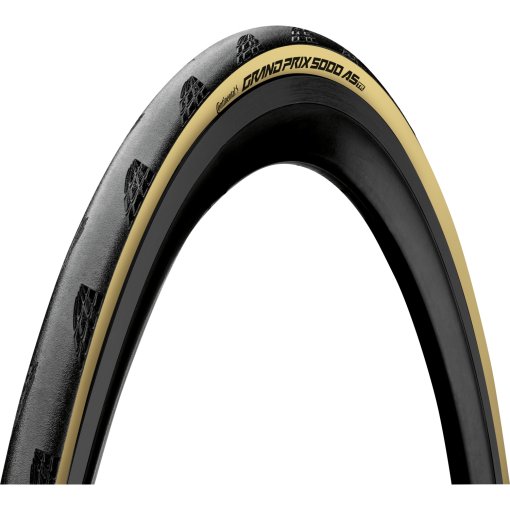
Road Bike Tires - Optimized for Maximum Performance
What a good road bike tire can do often only becomes clear when used in professional racing: when the racers rumble over the endless dust tracks of the Strade Bianche, break at full speed over the Belgian cobblestones and chase down the rain-soaked mountain passes of the Tour de France on the last millimetre of grip. Although the load limits of road bike tires are rarely exhausted in amateur sport, good tires are essential on a road bike - for riding enjoyment as well as safety.
Road Bike Tires - What You Should Look Out for When Buying
When it comes to bike tires, there is probably no product that pushes the limits of what is possible as much as the road bike tire. They are only a few centimetres wide and have to withstand pressures of over 7 bar and speeds of over 100 kilometers per hour. Nevertheless, it has to be tough enough to withstand a 200-kilometer race over a wide variety of road surfaces. The history of road bike tires goes way back to the 19th century: in 1839, the American Charles Goodyear invented the process of vulcanization, i.e. the production of rubber. The patent for the rubber tire filled with air was filed in 1845. And in 1889, the French Michelin brothers developed a pneumatic tire with a separate inner tube - the basis for today's racing bike tires.
More than 130 years later, the road bike tire is a high-end product. Road bike tires are available in a wide variety of designs and for different purposes - from puncture-resistant training tires to easy-rolling racing rubber. When buying new road bike tires, you have the choice and we have the choice. But with the help of a few selection criteria, you can ensure that the new tires are the perfect fit for your bike. Below we present the different types of road bike tires and their respective purchase criteria.
The Right Road Bike Tires for Your Wheel Size
If you want to buy a new road bike tire, the first thing to do is to take a close look at your wheels. This is because the wheel size provides an initial criterion for deciding which road bike tire is right for you. In most cases, the wheel size of road bikes is 28 inches. Only youth and women's road bikes in very small frame sizes and older road bikes are likely to have 26 inch wheels.
Road Tires According to Wheel Design
The design of your rim in turn determines which road bike tires you can ride on your wheel. The most common are so-called hooked rims (clinchers) for regular folding tires or wire bead tires that are ridden with a tube. These are popular because they are very easy to fit and practical for training and touring, as the inner tube can be changed on the go if it breaks.
In racing, on the other hand, glued tubular tires are often used. Tubulars, as tubular tires are also known, have a latex tube sewn directly into the cotton carcass, so that the tire itself is already a sealed system and only needs to be stuck to the rim. This combination is lighter thanks to the different rim design and promises more grip even at low pressure thanks to its stability.
In many cases, modern road bike rims for wire bead tires are also easily designed for use with tubeless tires: The suffix TL for tubeless or TLR for tubeless-ready on a rim and tires indicates that they are suitable for a tubeless setup.
💡 O ur expert tip: Both the rim and tires must be approved for tubeless in order to actually be able to ride tubeless.
The tubeless tire is similar to the folding tire, but has a reinforced carcass and an often more pronounced tire bead to ensure a stable and airtight fit on the rim - even without the pressure of an inner tube. The rim or wheel itself must be fitted with a special tubeless valve and rim tape in preparation so that it can seal the air to the outside.
The biggest advantage of a tubeless setup is the higher level of comfort combined with low rolling resistance. Tubeless tires can be ridden with a lower air pressure and therefore better shock absorbing bumps and vibrations from a rough surface. In addition, tire sealant is usually filled into the tire so that minor tire damage such as thorn punctures or cuts seal themselves.
What Areas of Use Are There for Electric Road Bikes Tires?
The next step is to narrow down the selection of road bike coats according to the area of use: Do you want a pure road tire for road bike training on asphalt? Or are you planning to ride your bike on gravel occasionally? Whether road bike, gravel, cyclocross, triathlon or for commuting to work - there is a suitable tire for every area of use. These can differ in terms of construction, width, rubber compound and tread, which has an impact on handling as well as grip, puncture susceptibility and rolling resistance. If you often ride in the wet or on gravel, a road bike tire with tread is a good choice.
In recent years, technical innovations on the tire market have led to two directions of development in terms of application: wider, often tubeless-capable touring road bike tires with reinforced puncture protection and extra-light tubular tires for competitions.
Folding tires in widths of 28-50 mm with air pressures of approx. 1.8 to 6.5 bar are mostly used on road bikes, gravel bikes and randonneurs for touring. They offer a good balance between comfort and rolling resistance, especially when tubeless ready, and are therefore aimed at ambitious amateur athletes to pleasure touring cyclists for whom every watt is not important.
For many amateur athletes and professionals, on the other hand, the motto is harder, further, faster, which is why they prefer to use tubular tires in 22 - 24 mm widths, sometimes at over 9 bar pressure, in road competitions for new best times. The special features of lightweight triathlon and road bike tires are still unbeatable thanks to the finest silk carcasses in combination with carbon wheels.
On training bikes, the situation is different again. Here, 25 to 30 mm wide folding tires are used for easier handling in the event of punctures. Wire bead tires with a rigid bead core are only used on complete road bikes for more affordable entry-level models and can easily be replaced with lighter folding road bike tires when the time comes.
Road Bicycle Tires by Manufacturer and Model
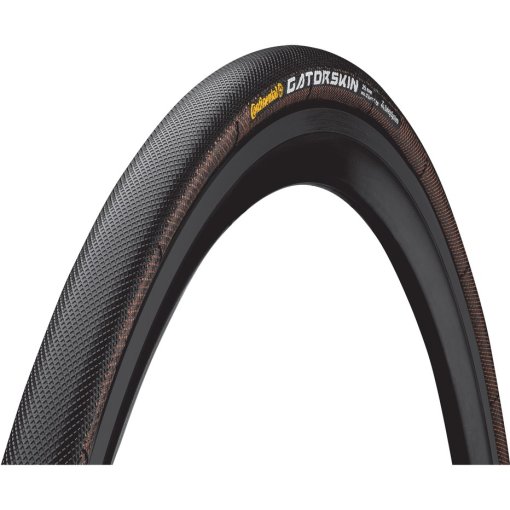
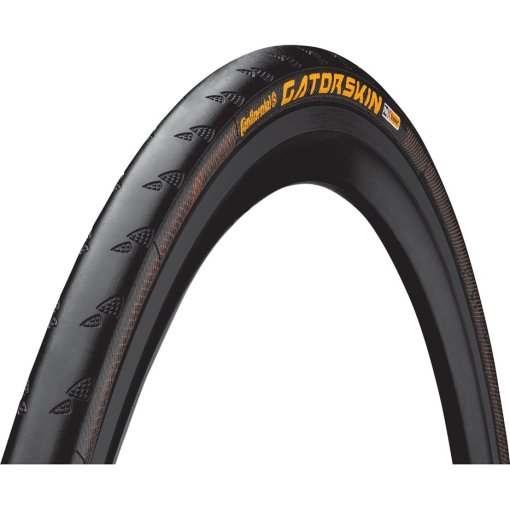
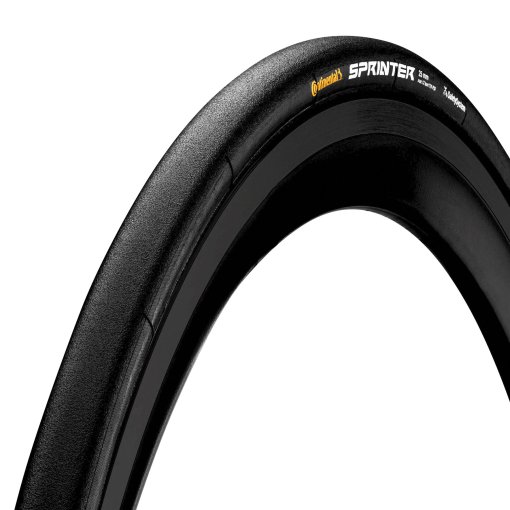
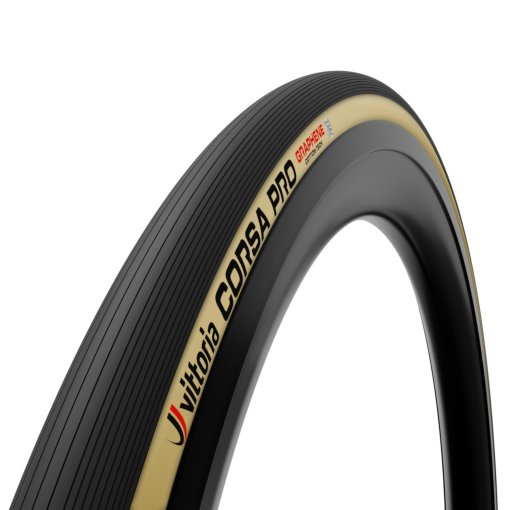
Once you have determined the most important parameters such as wheel size, type and intended use of your tires, you can now look around for a manufacturer. Well-known manufacturers of road bike coats include Continental, Schwalbe and Vittoria Tires.
This Is What Matters When It Comes to Tire Width
Each manufacturer offers a number of models in different tire widths and colors to choose from. So the next thing to consider is what width your tires should be. Depending on the width of the rim and the surface, different width tires are recommended: Modern road bikes range in frame 25 to 30 millimetres, while older models with narrower rims may still be designed for tires of 23 or even 21 millimetres in width. For off-road use, the UCI limit of 33 millimetres tire width applies for cyclocross racing. In gravel racing, the possibilities of widths from 35 to even 50 millimeters are almost unlimited.
The volume or width of road bike tires has been systematically increased in recent years. This has been possible thanks to finer carcasses, tubeless and a more rounded contact patch for greater comfort, depending on the air pressure. A very fine carcass and tubeless mean less flexing.
But what is behind the rounder contact patch? The contact patch corresponds to the footprint of the tire and is distributed according to pressure, inherent stability, volume and profile. Classic tires for road bikes have an ellipse shape, while the contact area of the current more voluminous models is closer to a circle. A tire with a contact patch of similar length and width deforms less when rolling and rolling resistance is positively influenced. Of course, this only works optimally with the same air pressure. However, thanks to the finer construction and tubeless compatibility, the pressure can be lowered for more damping and grip with similarly low resistance.
The Road Bike Tire Types at a Glance:
For a better overview, we have compiled a list of the different road bike tire types below:
- Wire bead tires/folding tires: classic combination of road bike coat and separate inner tube.
- Tubeless road bike tires: Tires without inner tubes that are self-sealing due to their construction together with the rim and tire sealant inside. Considered very puncture-proof.
- Tubular tires road bike: Mainly used by professionals. They are ridden on special lightweight carbon wheels. Tubular tires consist of a combination of coat and sewn-in tube and are glued to the rim.
Buy Your Racing Bike Tires at BIKE24
Have you decided to buy a road bike coat from our huge selection? Now you'll want to mount the tires. You'll need the appropriate tire accessories, such as tire levers or an air pump. You can always find information on the appropriate air pressure for road bike tires on the sidewall of the respective tire, and most manufacturers also offer precise tables on their websites where you can find the perfect air pressure specification for you and your road bike. Incidentally, the correct tire pressure is the last piece of the puzzle when you buy a new road bike tire. Only the right pressure will give you the best possible ride feel, the lowest rolling resistance and the highest puncture resistance from your new tires.